
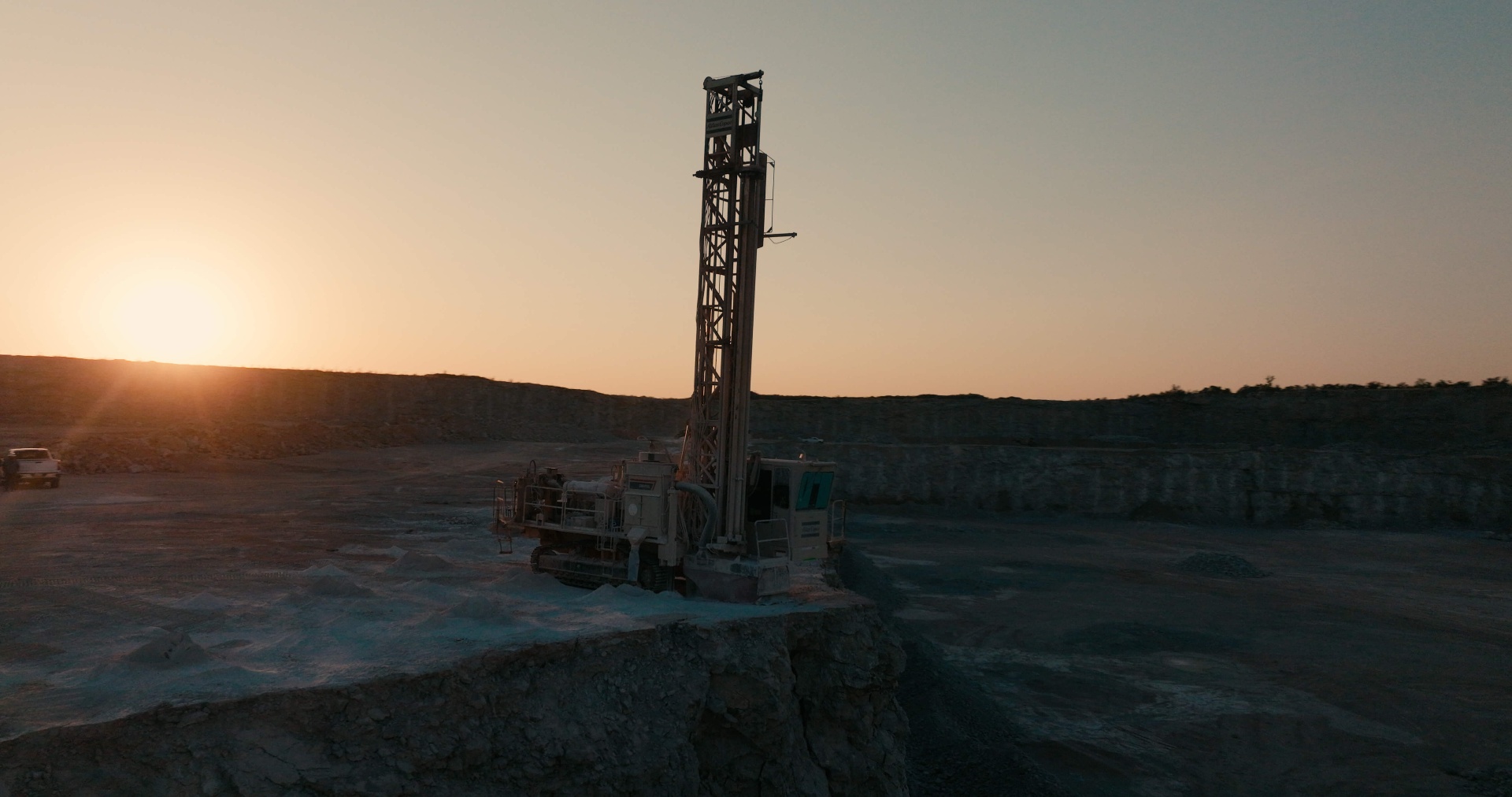
Geotechnical Drilling Rigs & Equipment


Republic Drill Co. supplies geotechnical drilling rigs and equipment for site investigation, foundation design, environmental assessment and monitoring well installation — the borings behind bridges, buildings, wind and solar sites, landfills and remediation programs where the data has to survive a review.
The lineup is built around Comacchio GEO-series crawler rigs, from compact low-headroom units for basements, interiors and restricted-access lots through larger multipurpose crawlers for micropile, anchor and deep investigation work. Configurations cover hollow-stem auger and SPT sampling, rotary and wireline coring, and casing advance in mixed ground. Perforator supplies tooling, and we source used geotechnical rigs when a schedule requires it.
Investigation work is tooling-intensive and moves constantly, so support is what protects the schedule: augers, rods, casing, samplers and core barrels matched to the rig's thread and your sampling standard, wear parts and hydraulics on the shelf, and technicians for commissioning, head rebuilds and field troubleshooting. The outcome for the driller is boreholes advanced to depth with samples that meet the spec, a rig that gets onto restricted sites without extra mobilization cost, and fewer standby days waiting on a part.
Featured rigs & equipment
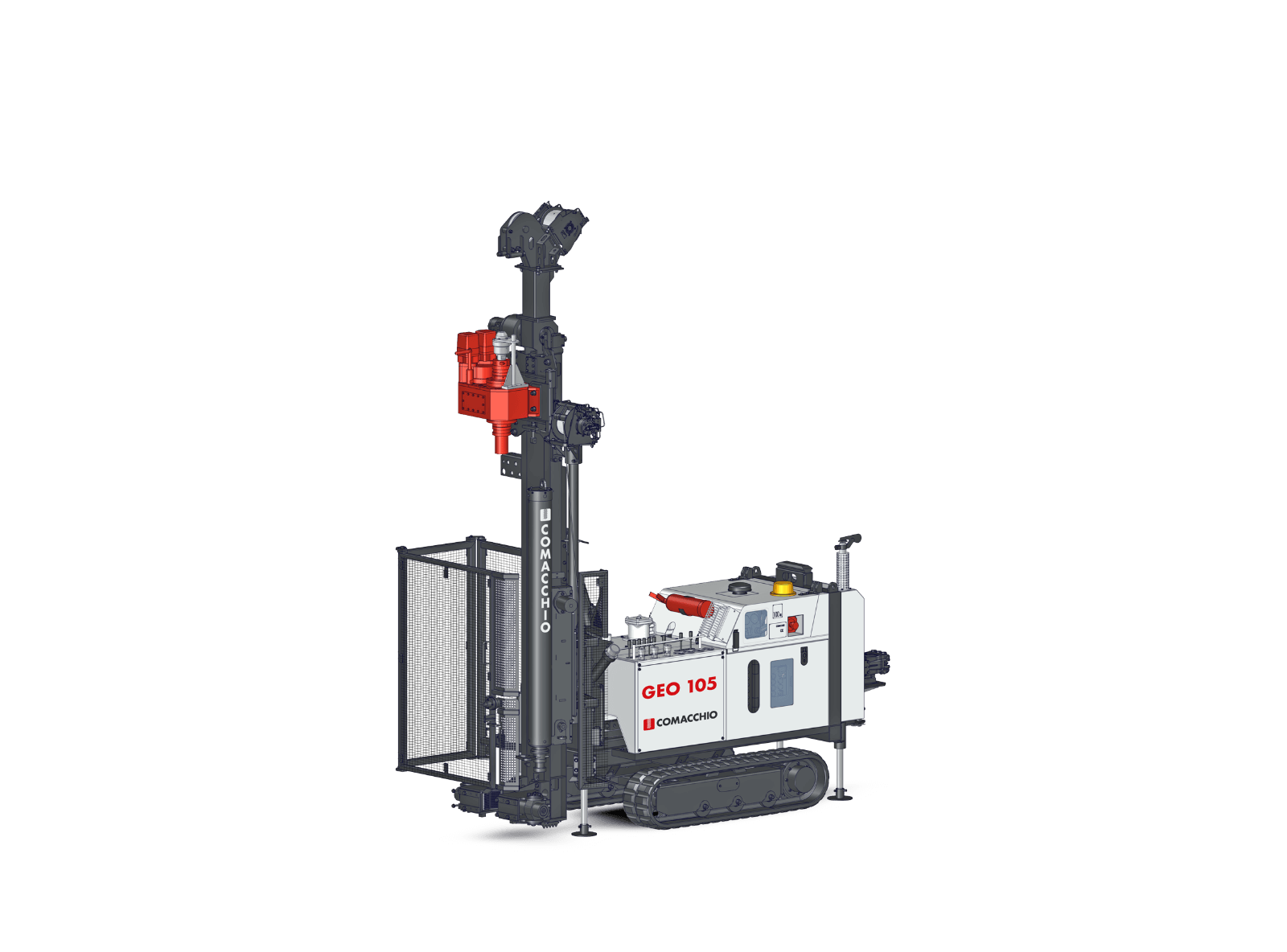
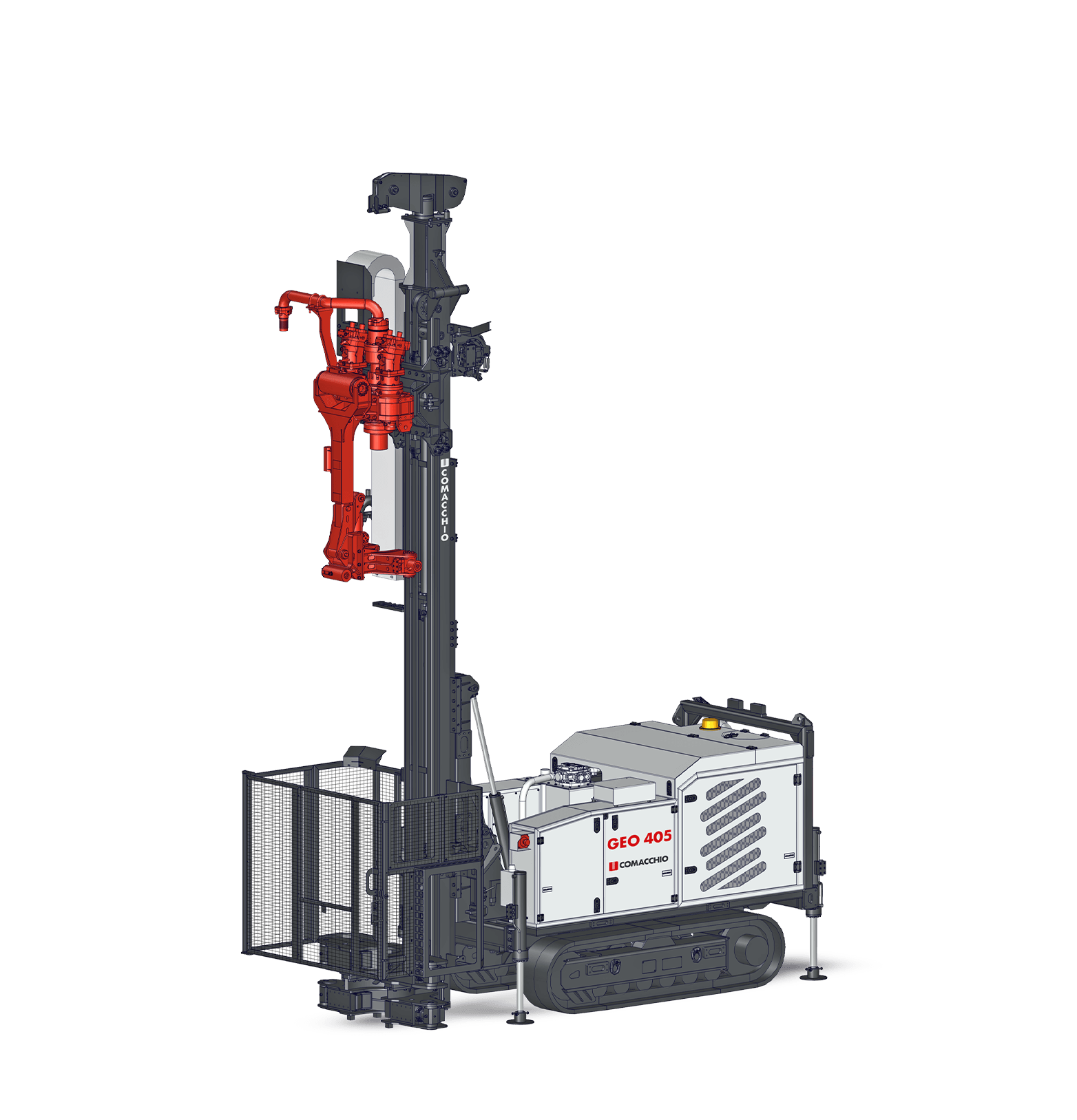
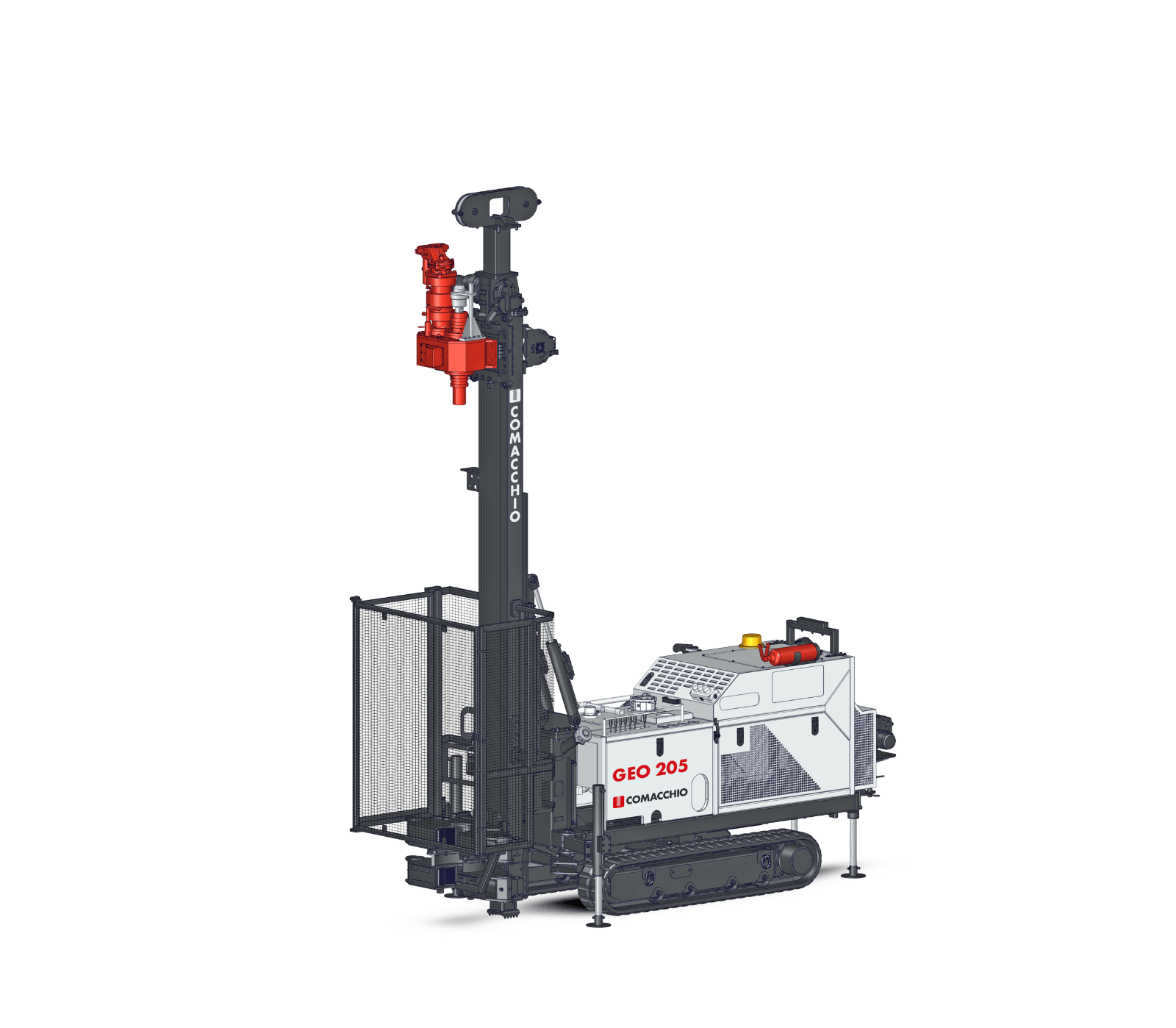
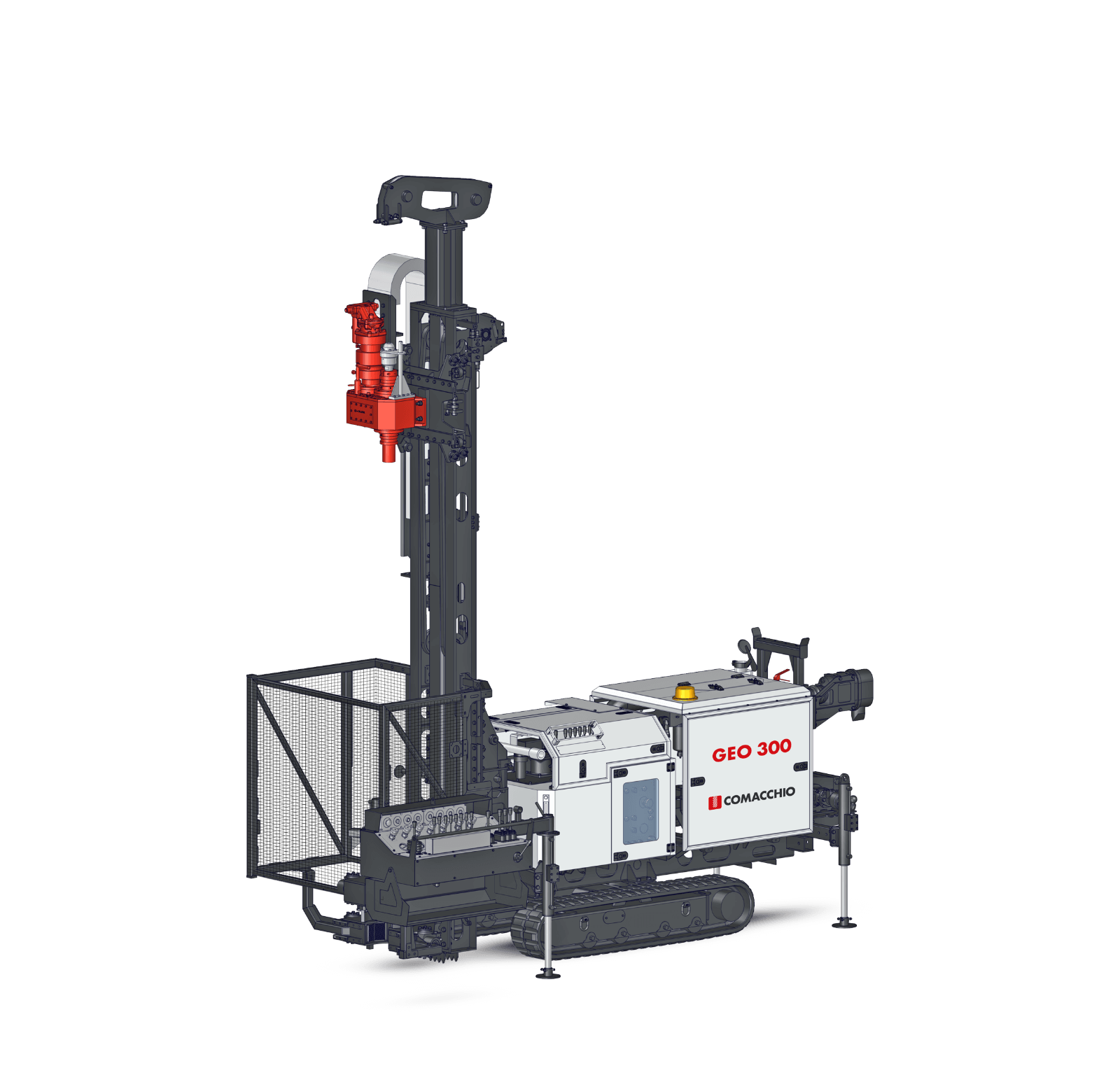
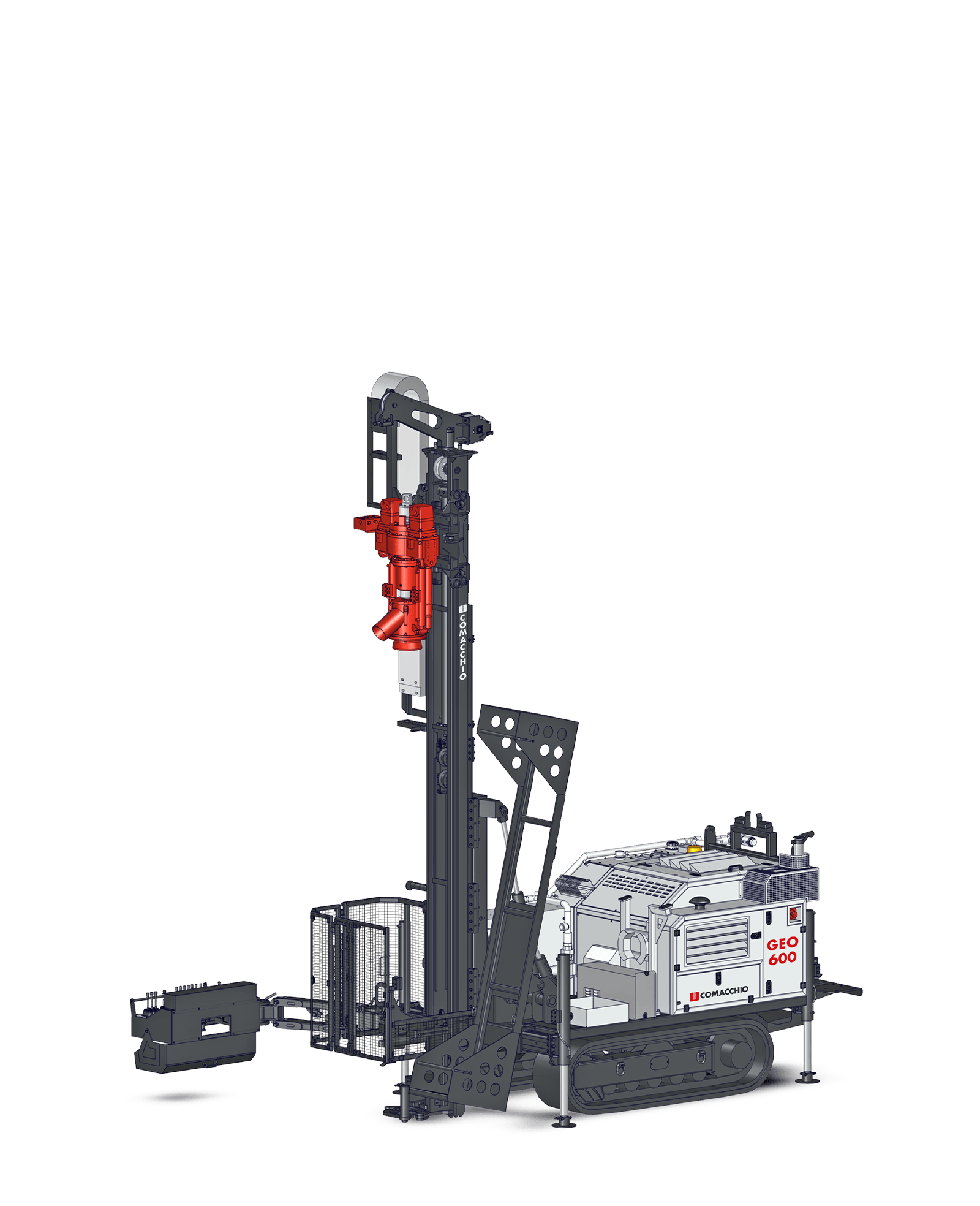
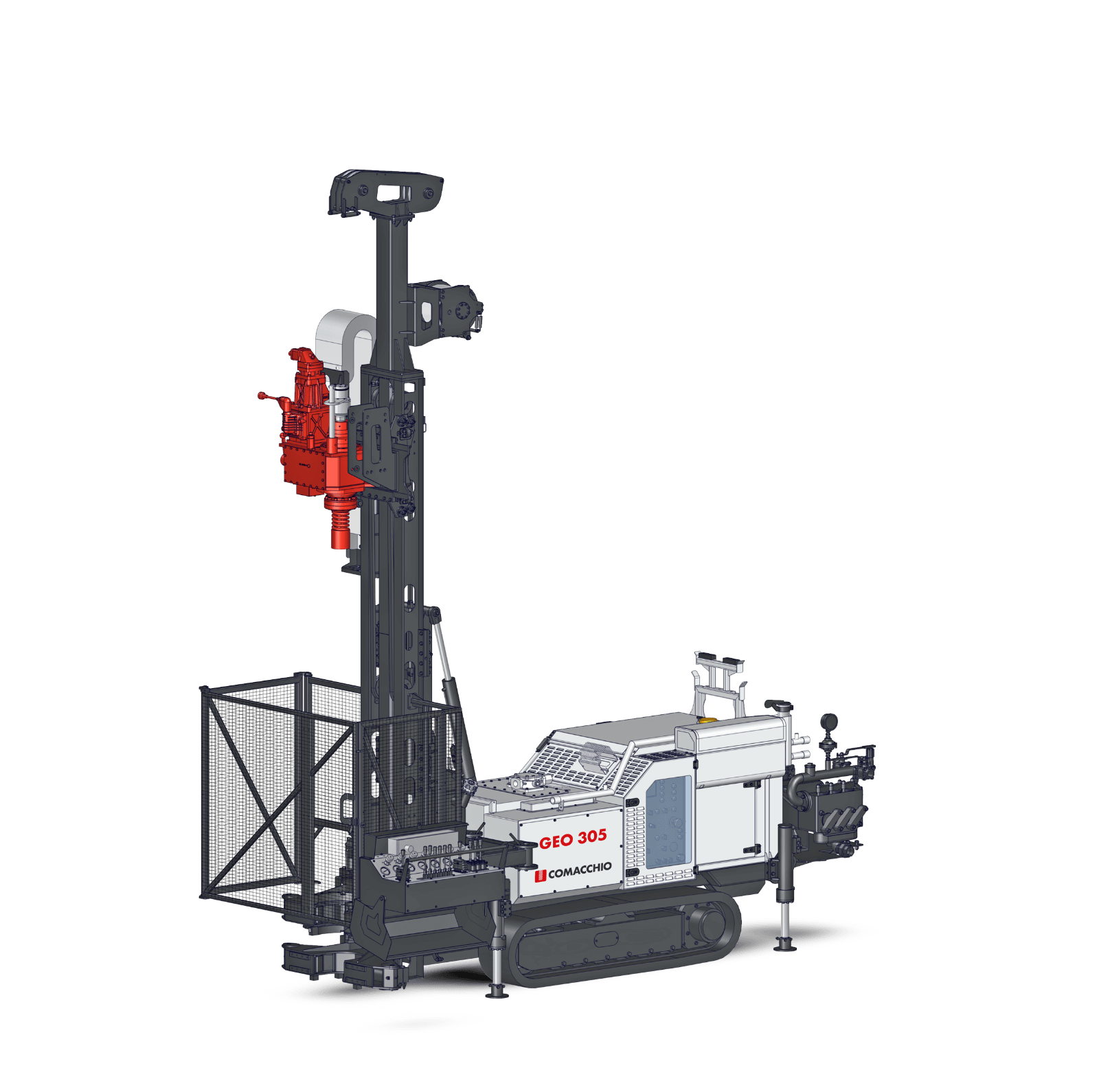
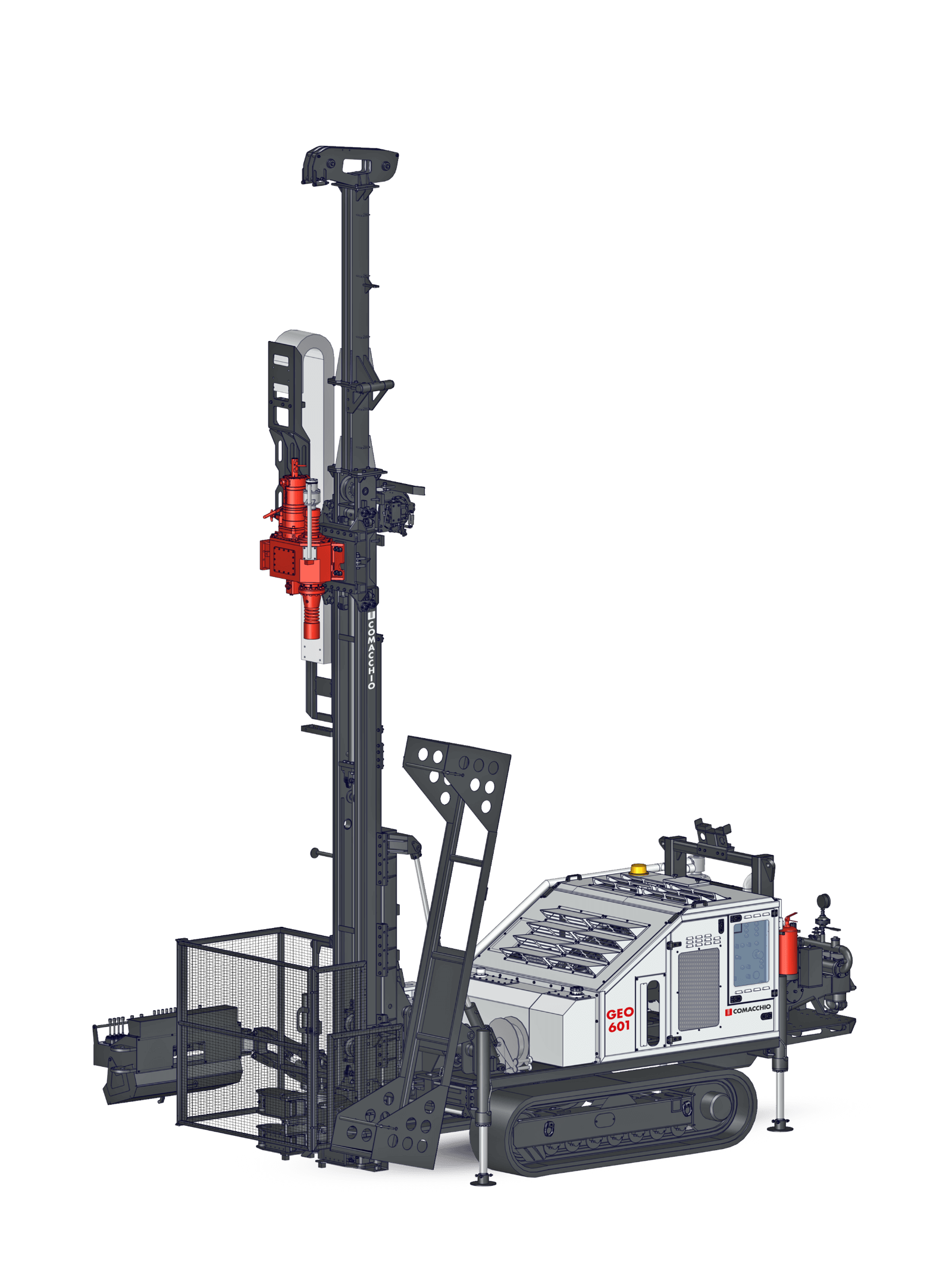
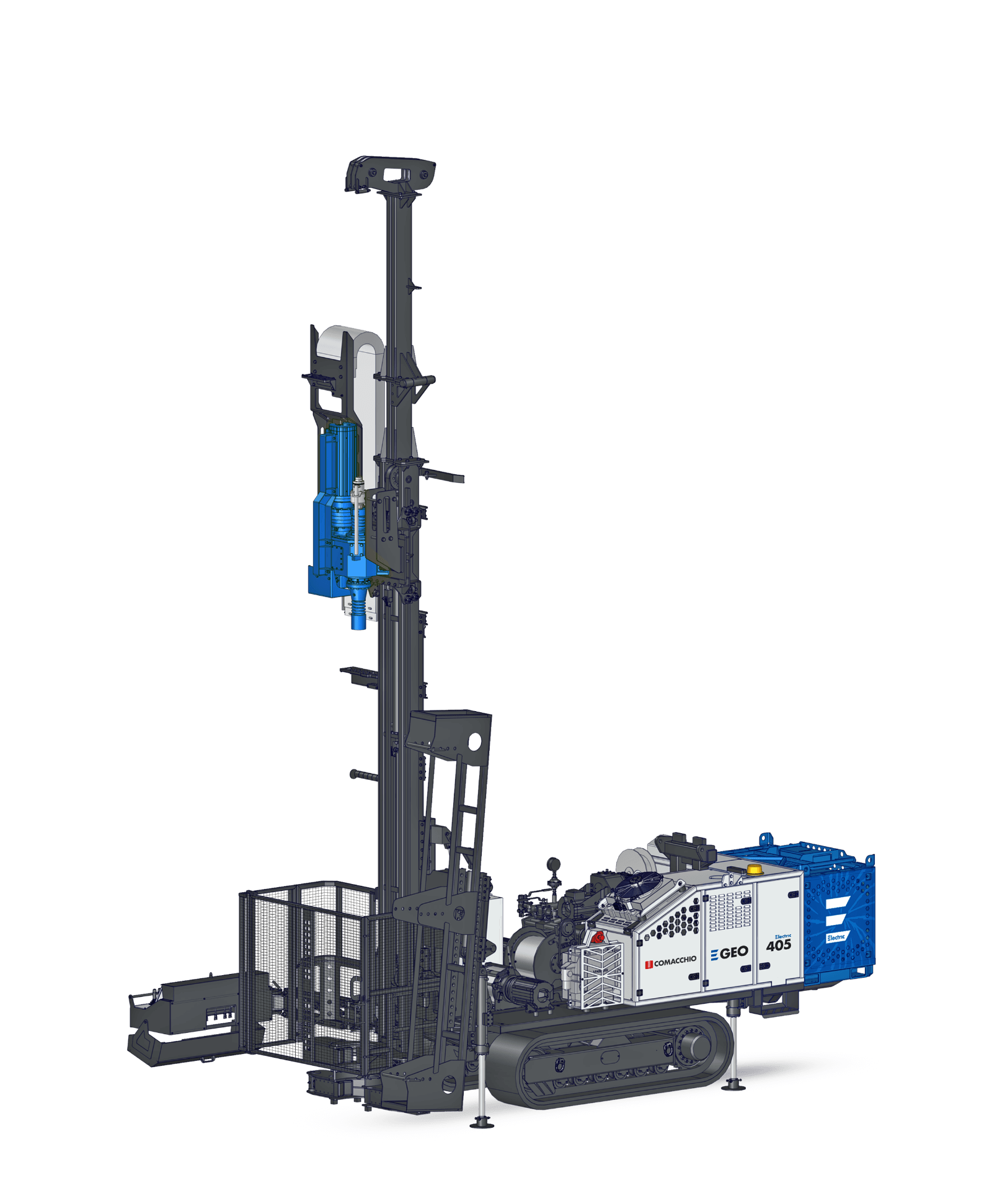
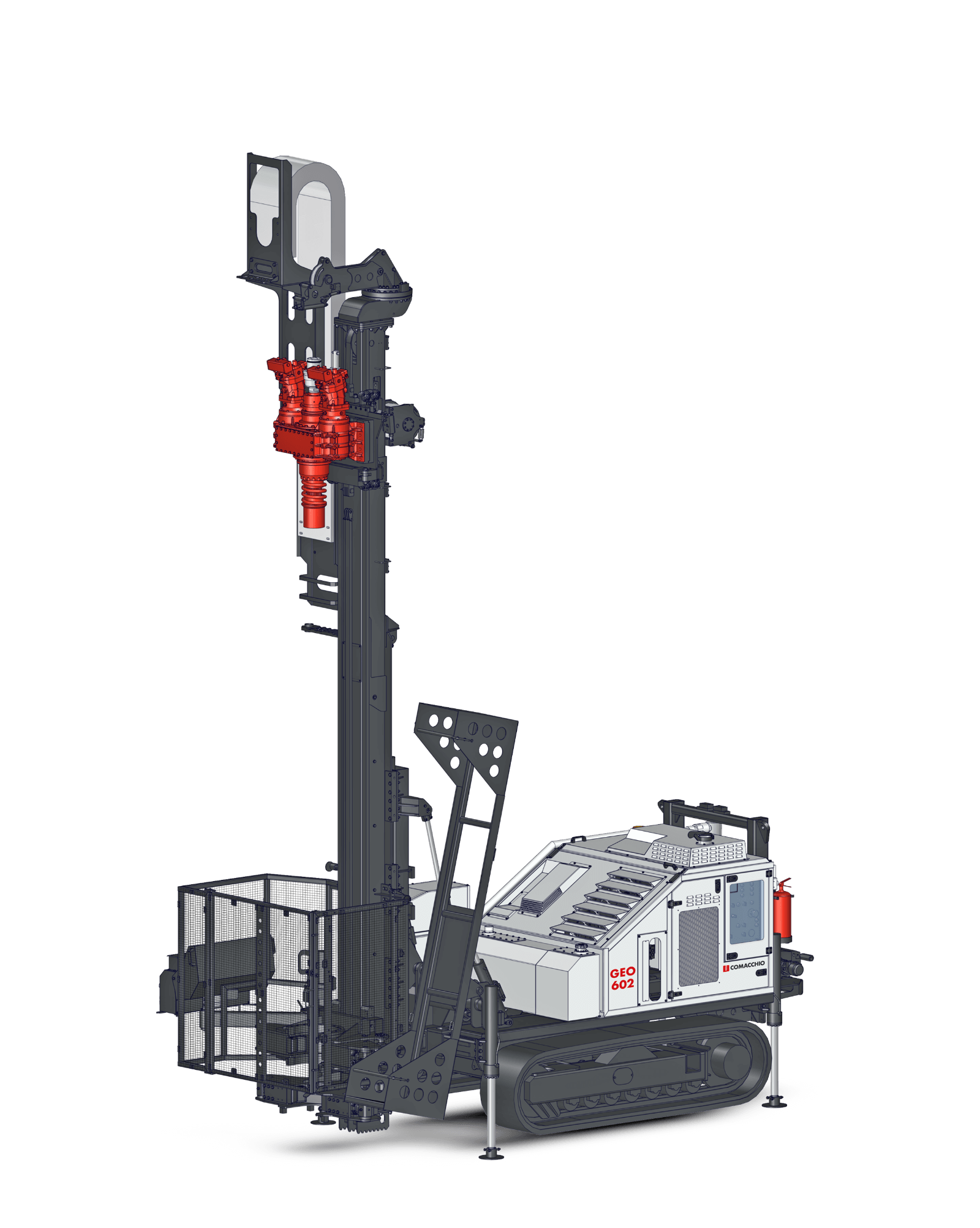
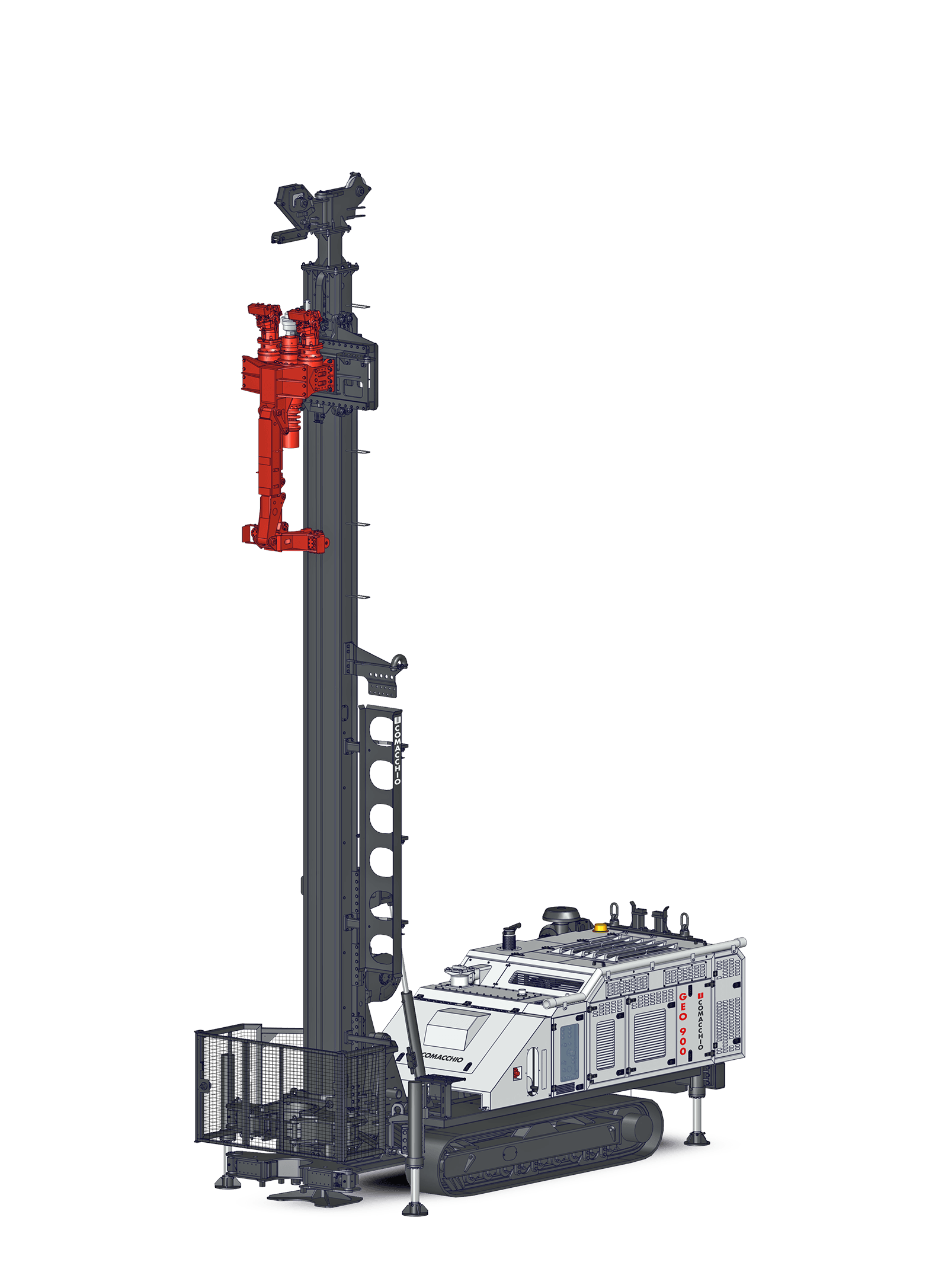
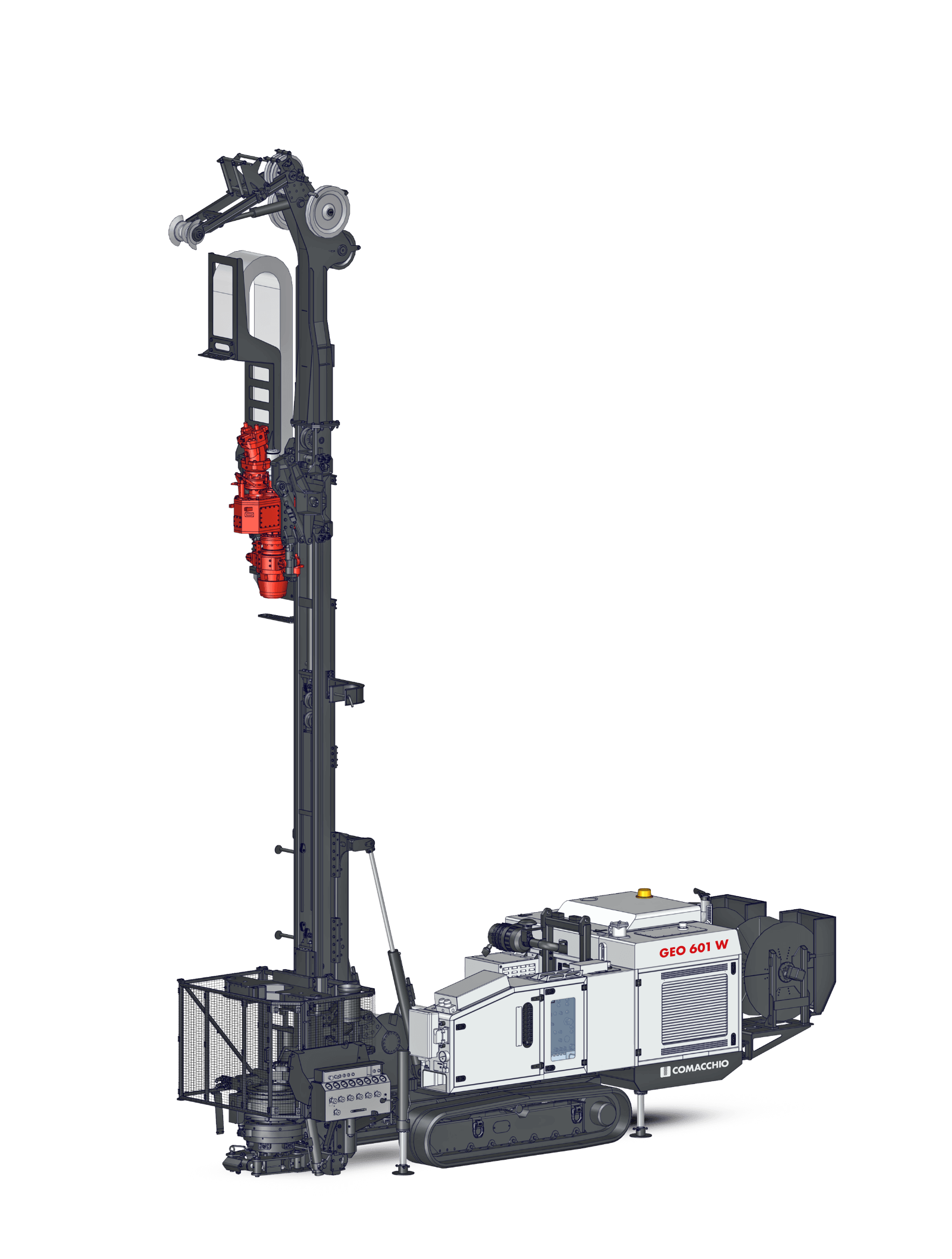
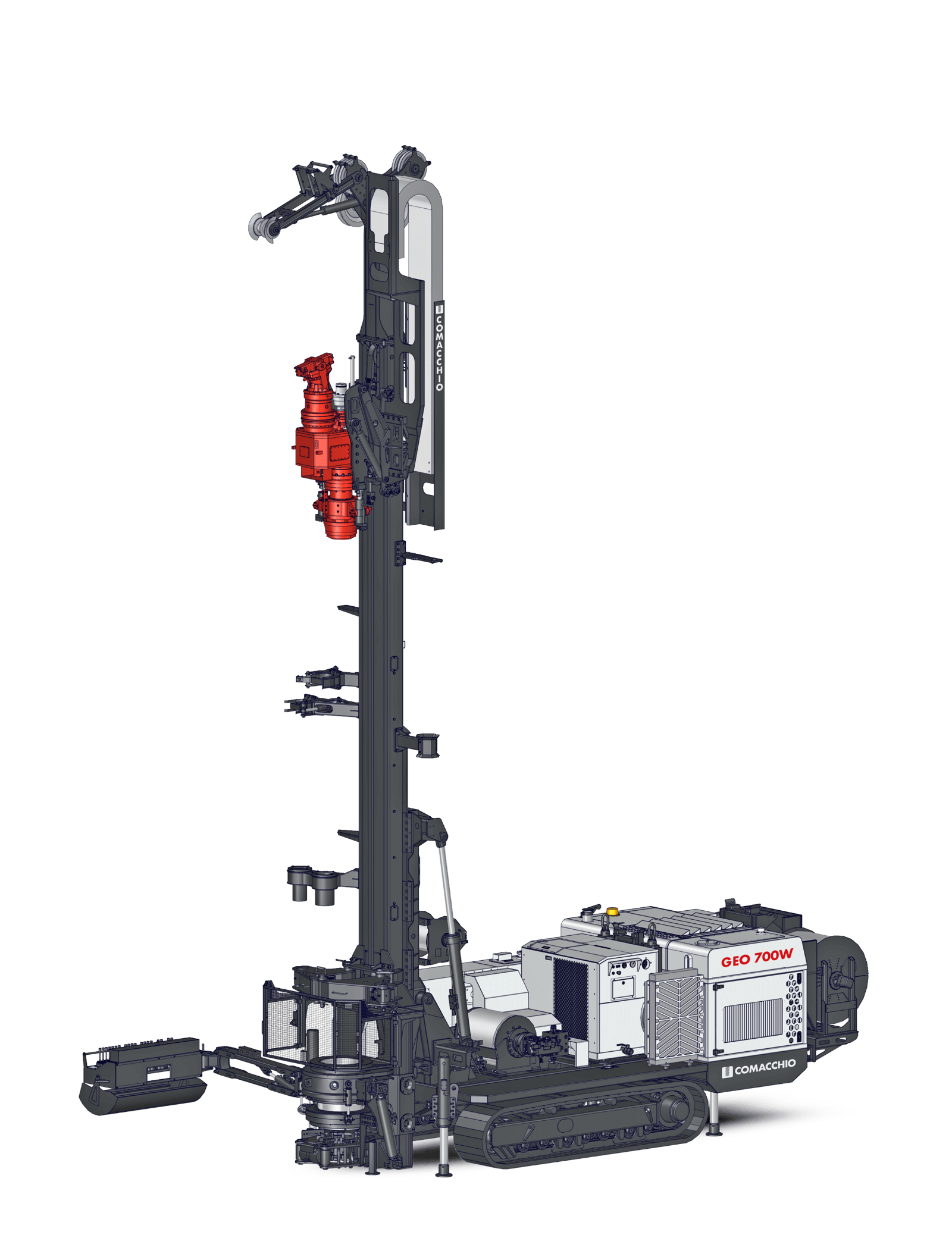
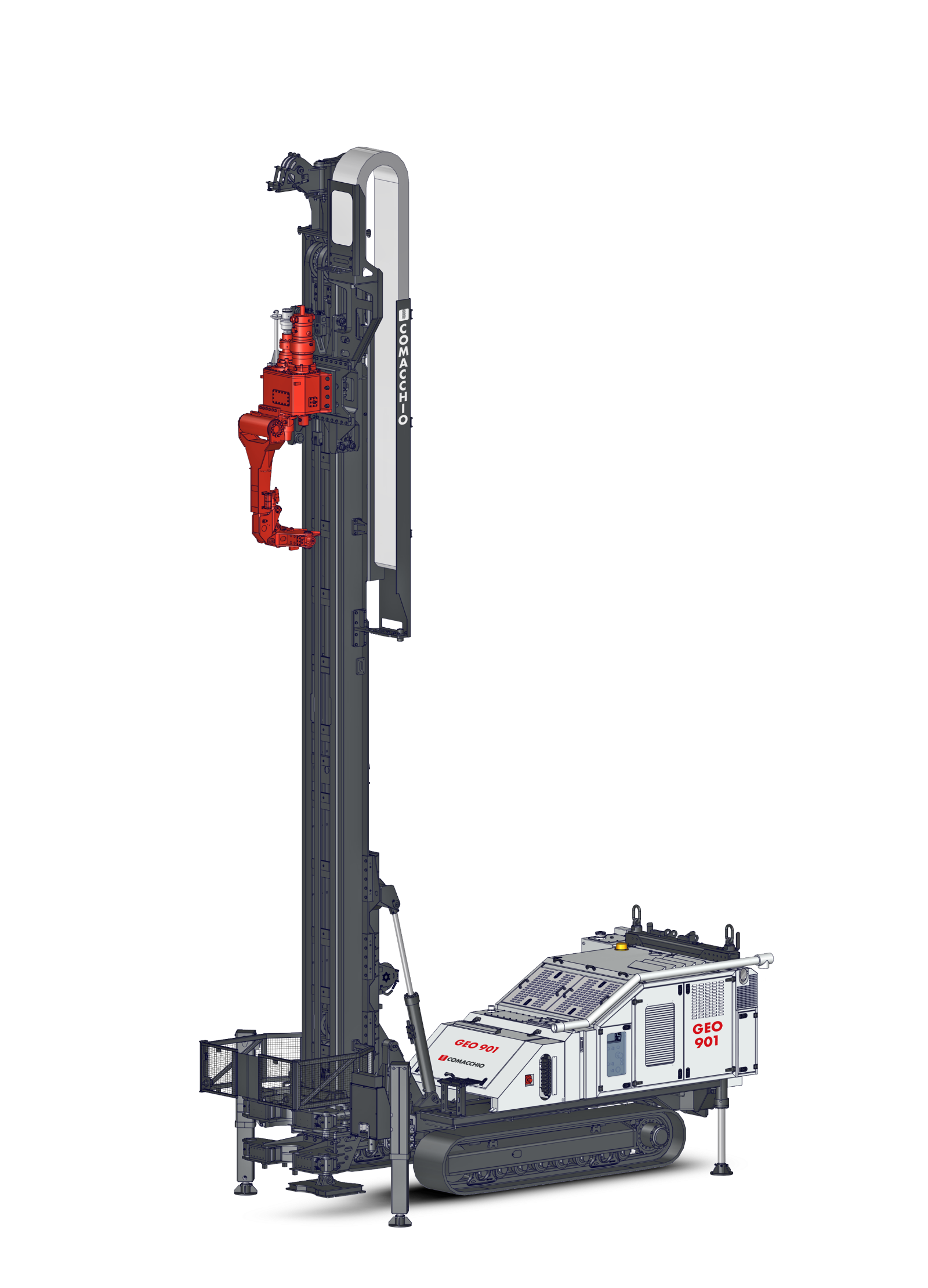
Geotechnical drilling methods and the equipment they take
Hollow-stem auger with SPT
The default shallow investigation method. Augers hold the hole open while split-spoon samples are driven at interval for blow counts and classification.
HSA flights, center rod, automatic hammer, split spoons
Mud rotary with sampling
Used below auger refusal or where the hole needs fluid support. Sampling continues at interval through the drill string.
Mud pump, drag/tricone bits, Shelby tubes, rods
Rotary & wireline coring
Recovering continuous rock core for strength testing and RQD. Wireline retrieval saves trips on deeper holes.
Core barrels, diamond bits, wireline overshot, casing
Sonic
High-frequency resonance advances casing and core with minimal spoil and excellent recovery in mixed ground and fill.
Sonic head, sonic casing and core barrels
Cone penetration testing (CPT)
A pushed instrumented cone giving continuous stratigraphy without cuttings. Often paired with a boring program rather than replacing it.
CPT push system, cone, reaction mass
Environmental & monitoring wells
Well installation, remediation borings and probe work where cross-contamination control and decon protocol govern method choice.
Direct push tooling, screen and riser, filter pack, bentonite
How to choose the right geotechnical rig
- 01
Start with the sampling standard
SPT, undisturbed tube sampling, continuous core and CPT put different demands on the rig. Spec around what your reports require.
- 02
Access is usually the deciding constraint
Interior, low-headroom, tight-access and slope work eliminate most rigs before depth is even discussed. Measure your worst recurring site.
- 03
Set depth by the deepest routine hole
Rated depth varies by method — auger depth, core depth and mud rotary depth are three different numbers on the same rig.
- 04
Decide if the rig does double duty
Multipurpose crawlers that also drill micropiles, anchors or jet grout keep the machine working between investigation contracts.
- 05
Weigh mobilization economics
Track carriers, self-loading transport and rig weight determine how many trucks it takes to move you and how fast you can get to the next site.
- 06
Confirm tooling supply
Augers, rods, casing and samplers get consumed and lost. Confirm what's stocked in your sizes before the season starts.
Specifications buyers compare — and why they matter
| Specification | Why it matters |
|---|---|
| Rated depth by method | Auger, mud rotary and core depths differ. Compare the number for the method you actually run. |
| Rotary head torque and rpm range | High torque for augering and casing; high rpm for diamond coring quality. |
| Pullback / hoist capacity | What you can recover when augers or casing bind up in tight ground. |
| Mast headroom and folded height | Determines interior and low-clearance access — often the go/no-go spec. |
| Machine width and transport weight | Gate access, floor loading and how many trailers a mobilization takes. |
| Automatic SPT hammer and energy ratio | Calibrated hammer energy is required for defensible N-values. |
| Mud pump and water pump capacity | Circulation for coring quality and hole stability. |
| Winch capacity and wireline setup | Trip speed on deeper core holes. |
| Ground pressure and slope capability | Whether the rig can work soft sites and embankments without mats. |
Who we represent in geotechnical drilling
The support behind the rig
Drill pipe & rod
Perforator DTH, rotary and RC drill pipe, subs and crossovers matched to your rotary head thread, torque rating and hole depth.
Drill pipe →Bits, hammers & tooling
DTH hammers and bits, tricone and drag bits, rock drill steel, shanks, and couplings stocked by size and formation.
Tooling →Parts & consumables
Wear parts, filtration, hydraulics, rock drill oil, and thread compound. Stocked items ordered by 3PM CST ship next day.
Consumables →Field service & shop repair
Rig commissioning, preventive maintenance, hydraulic and rotary head rebuilds, and troubleshooting — in the shop or on location by territory.
Field service →Restricted-access investigation, urban infill site
A geotechnical firm had a downtown investigation with an eight-foot gate and overhead clearance under an existing structure. Their standard truck rig couldn't reach the boring locations and hand-auger substitution wouldn't satisfy the sampling spec.
A compact GEO-series crawler configured for low headroom reached every planned boring on the plan set, with SPT sampling to spec and no structural demolition or crane mobilization.
Geotechnical equipment questions we get asked
Which rig suits SPT and auger investigation work?
A crawler-mounted GEO-series rig configured for hollow-stem auger with an automatic SPT hammer covers most routine investigation. Choose the frame size by your access constraints and typical boring depth.
Can these rigs core rock as well as auger soil?
Yes — multipurpose configurations run hollow-stem auger, mud rotary and wireline coring on the same machine. Confirm the rotary head rpm range if coring quality is a priority.
What rig fits interior or low-headroom work?
Compact crawlers with folding masts and narrow track widths. Give us your gate width, door height and ceiling clearance and we'll spec to the tightest of the three.
Do you supply augers, rods and samplers?
Yes, matched to your rig's thread and sampling standard, along with casing, core barrels and consumables.
Is CPT part of what you supply?
CPT is one of the methods our customers run alongside boring programs. Tell us your program mix and we'll advise on rig and tooling configuration.
Do you service geotechnical rigs?
Yes — commissioning, preventive maintenance, hydraulic and head rebuilds, and field troubleshooting by service territory.
Get a quote on geotechnical drilling equipment
Send us the program — formation, depth, hole diameter and access — and we'll quote the rig, tooling and support package that fits it.
Everything else we run.
One Republic, four ways we keep you drilling.
Services
Field service, shop rebuilds, audits, site planning, and driller training — the wraparound that keeps programs running.
Parts
OEM and aftermarket parts pulled from trucks, not catalogs. NEXT-DAY SHIP OF STOCKED ITEMS from four locations.
Tooling
Bits, hammers, fluids, and the kit that gets pulled before the truck leaves the yard.