

Geothermal Drilling Rigs & Equipment




Republic Drill Co. supplies geothermal drilling rigs and the equipment behind a ground source heat pump program: vertical closed-loop bores for residential and commercial buildings, open-loop supply and injection wells, and the multi-bore fields that go under schools, campuses and data centers.
The lineup centers on Comacchio GEO-series hydraulic rigs — compact crawlers for tight residential lots through larger units for production loop fields — plus the Republic Loop Loader, which we design and build to get loop pipe in the ground faster with less crew handling. Intric Solutions grout plants, Perforator tooling, DTH hammers, drill pipe and air packages complete the spread, and we broker used geothermal iron when a contractor needs a second rig for a season.
Loop programs live or die on cycle time, so support matters as much as the rig. We stock hammers, bits and pipe by size, keep wear parts and grout components on the shelf, and run field service and shop repair for commissioning, hydraulic work and rotary head rebuilds. The outcome for the contractor is more bores completed per crew day, grouted and pressure-tested the same shift, and a rig that stays in the field through the heating-season rush.
Featured rigs & equipment
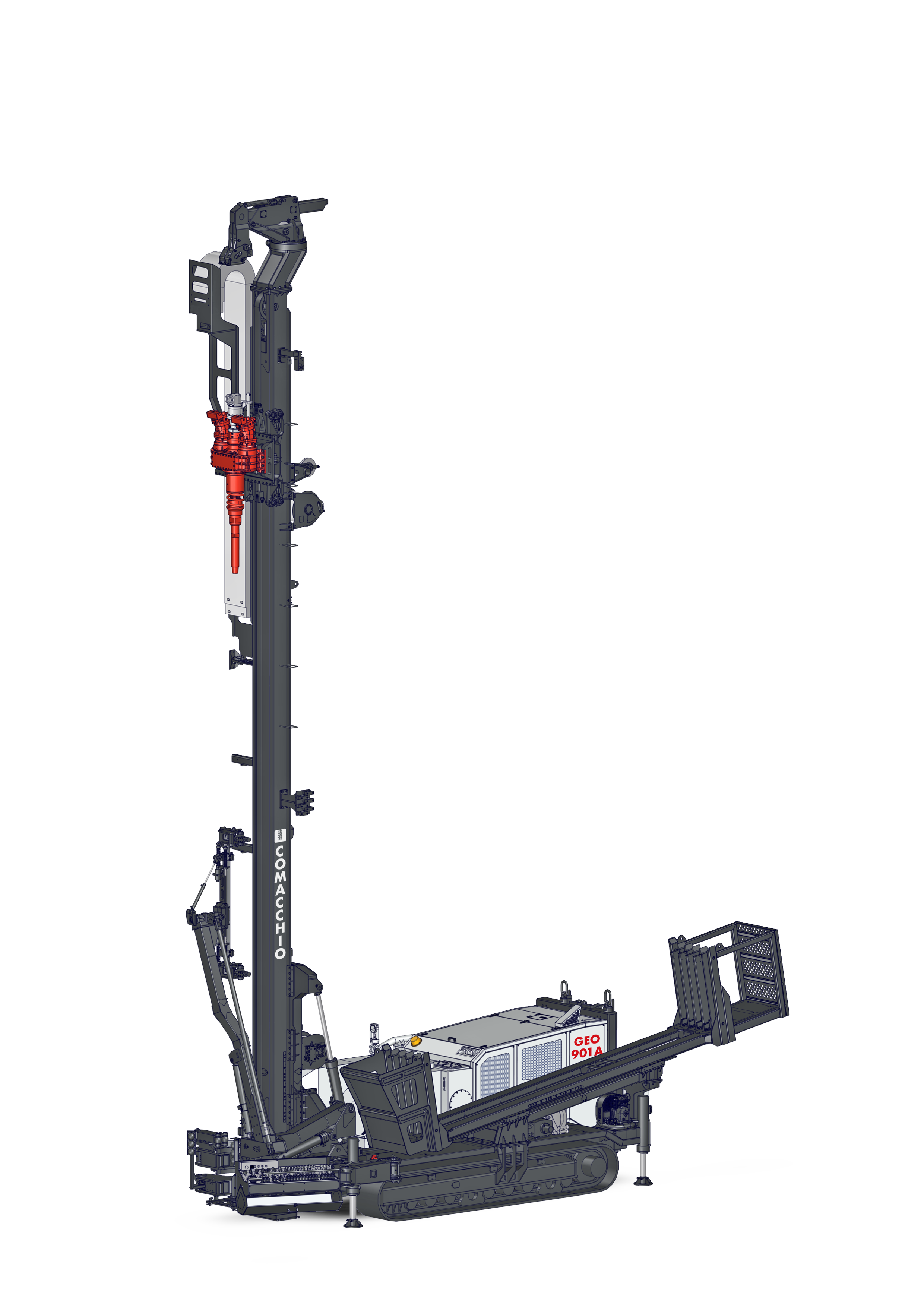
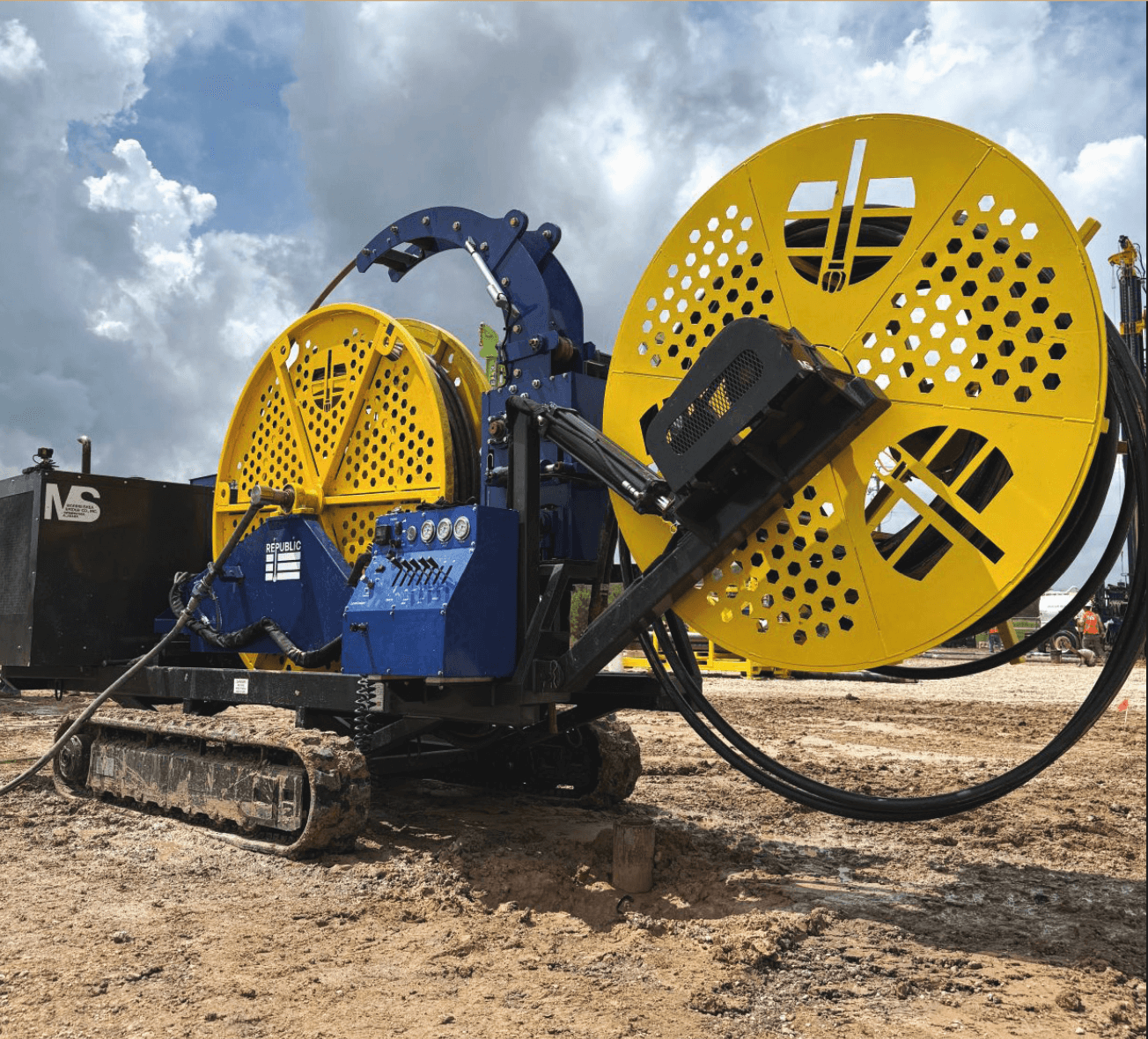


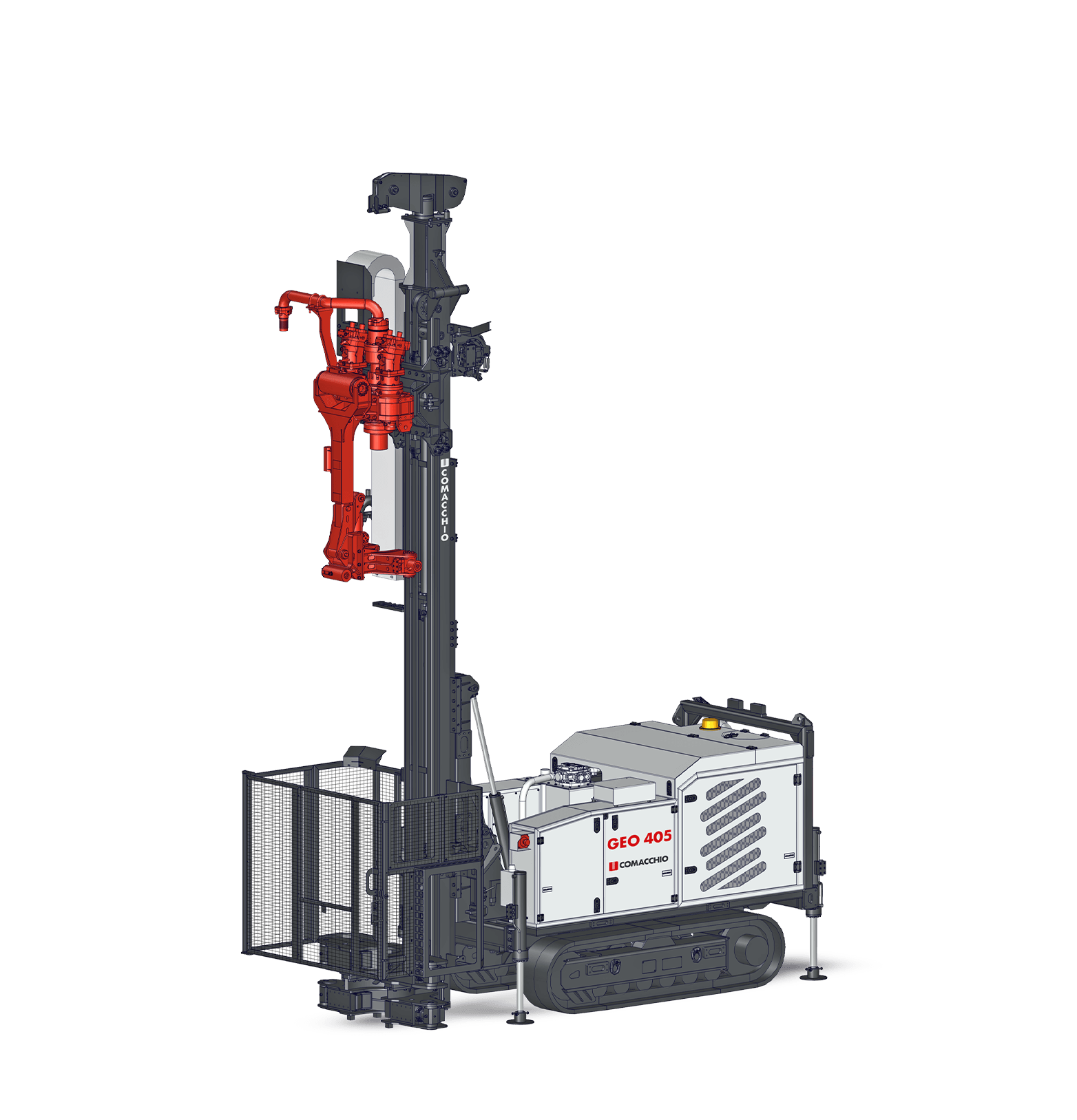

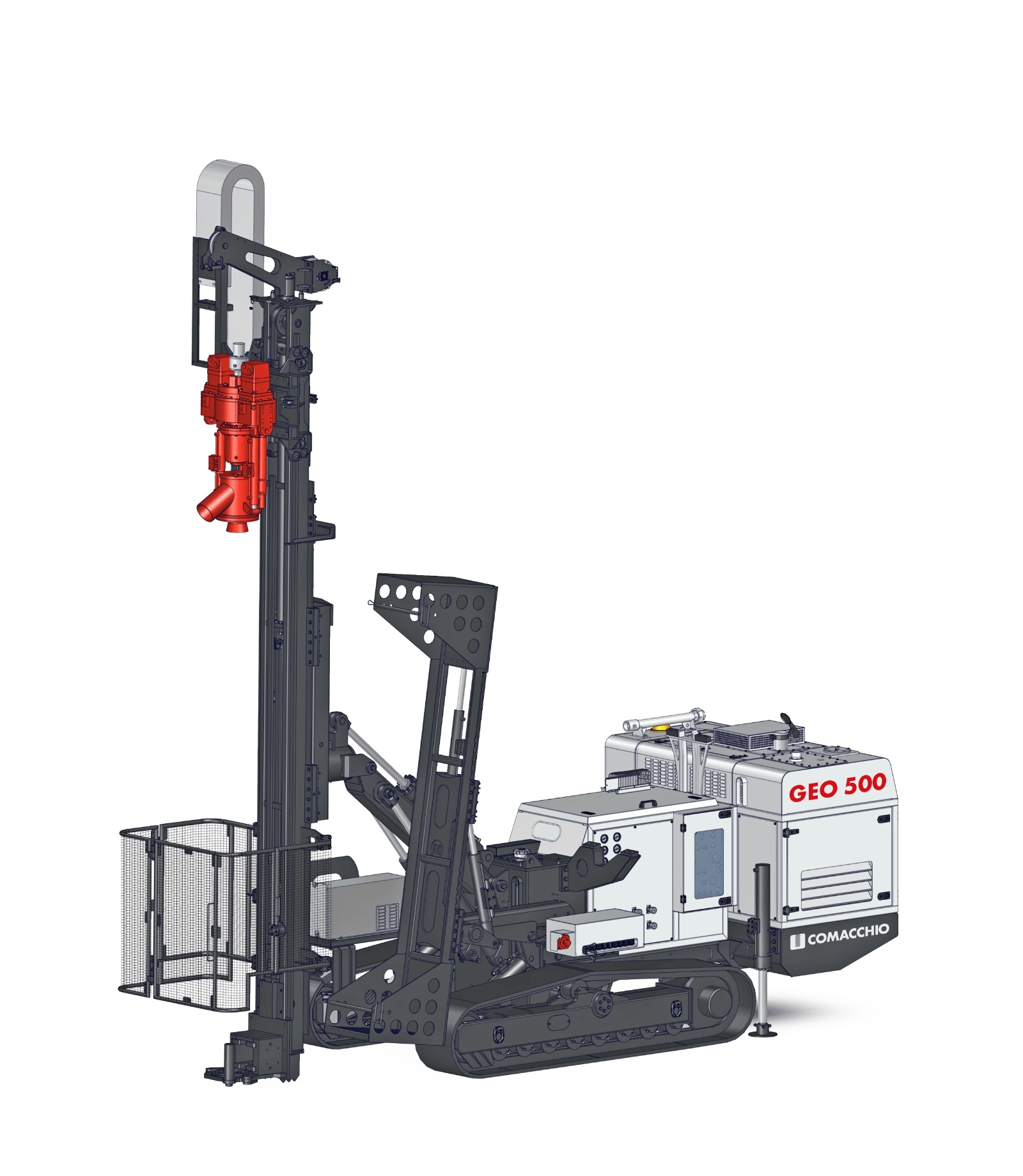
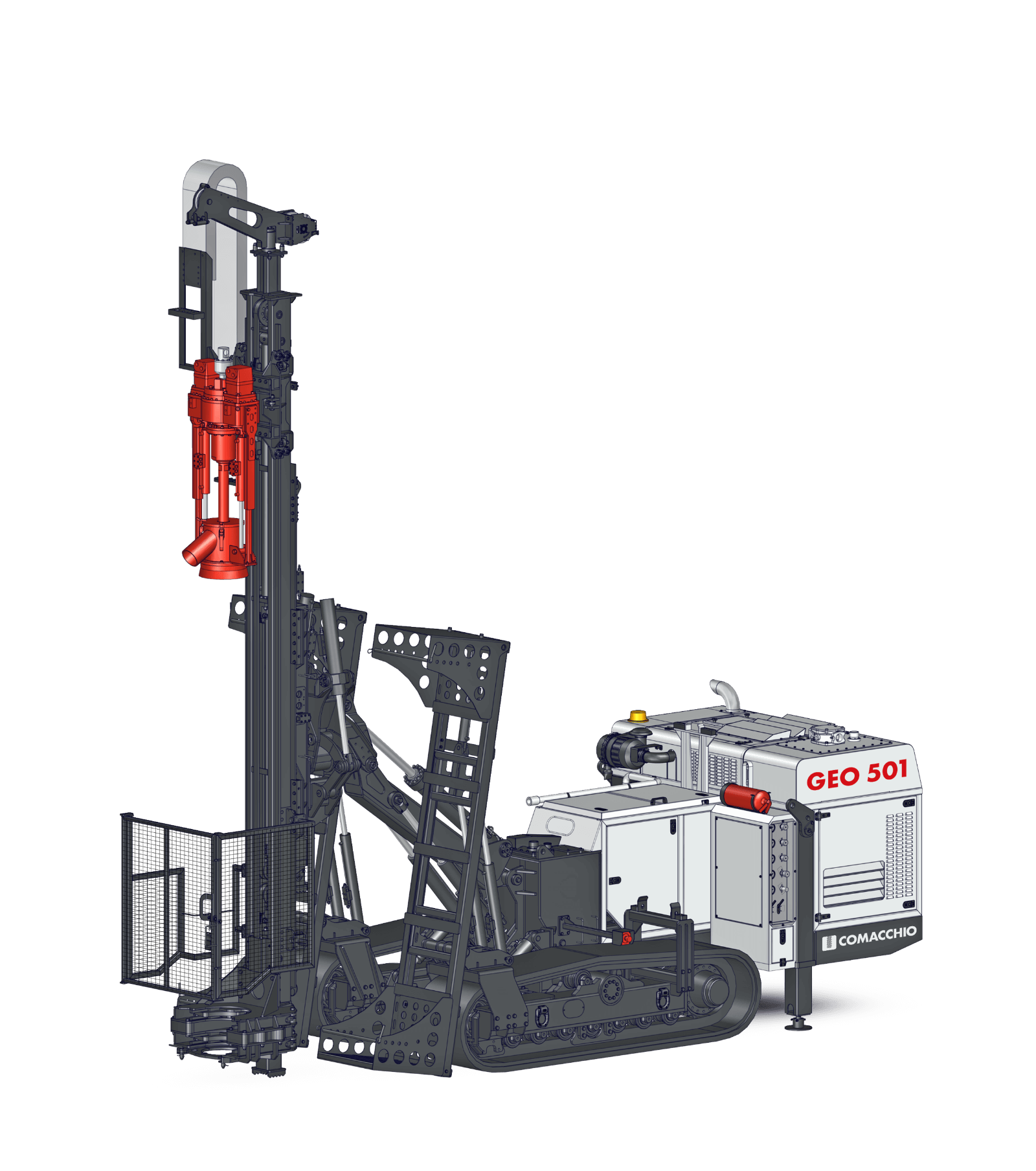
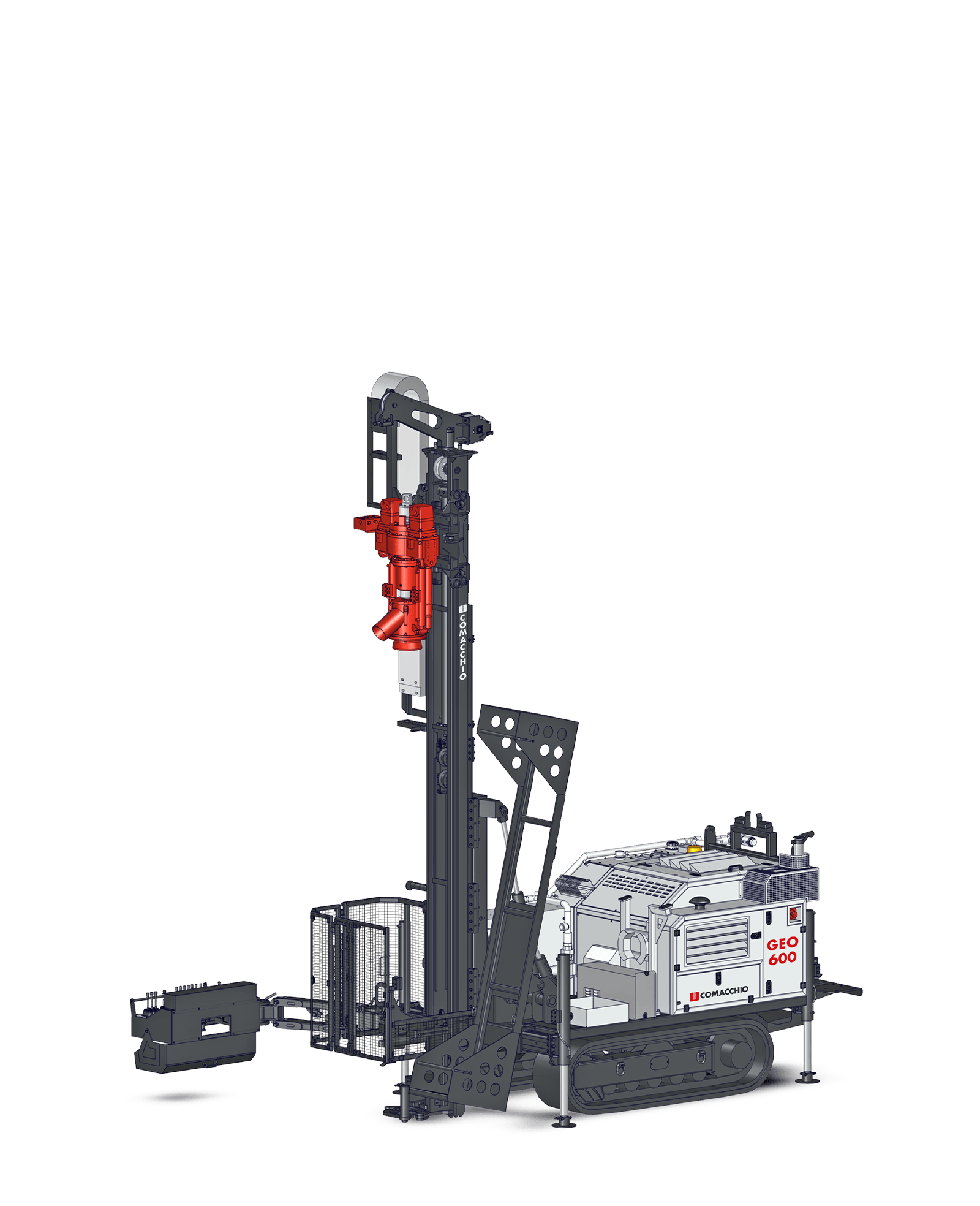
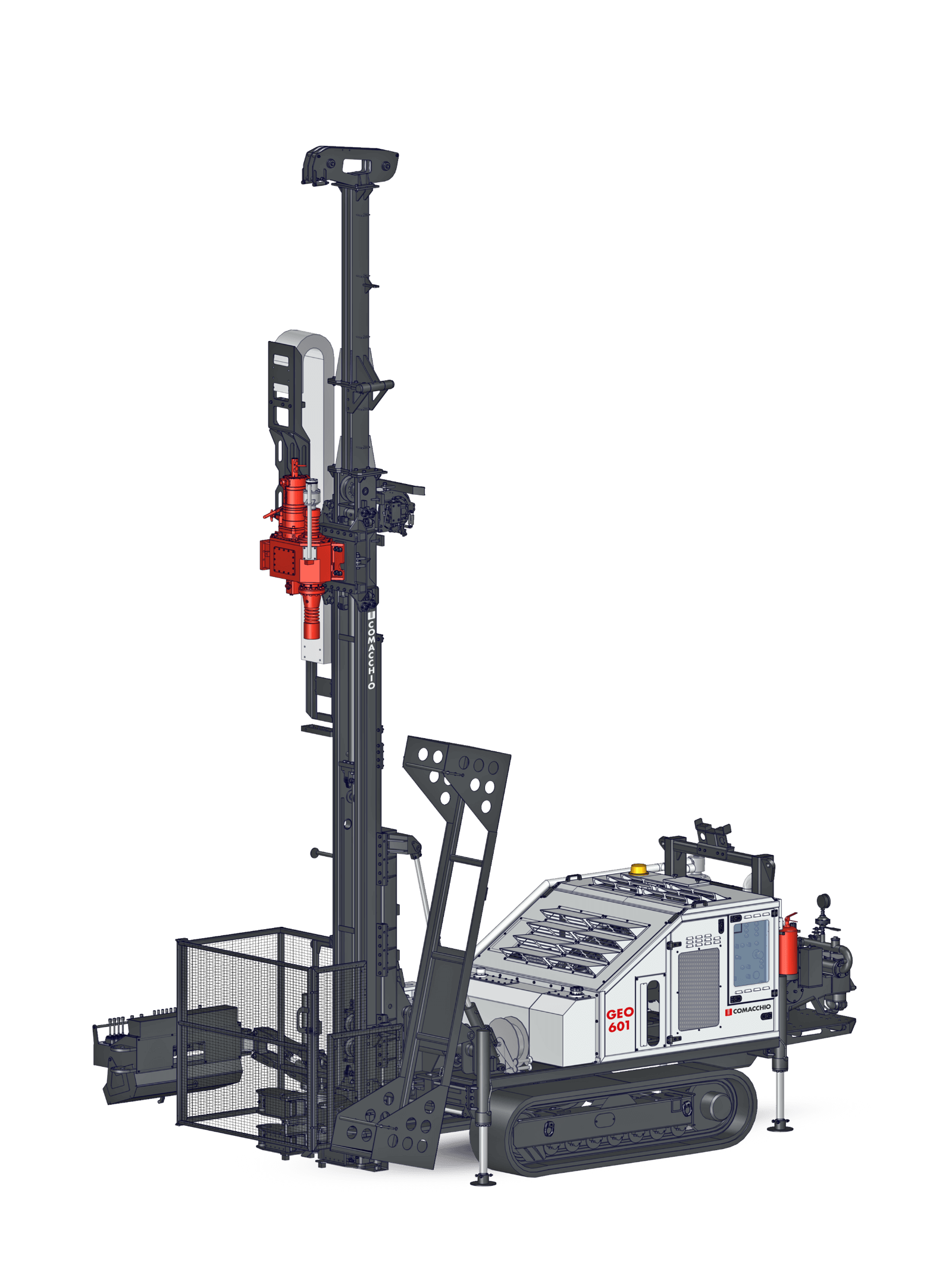
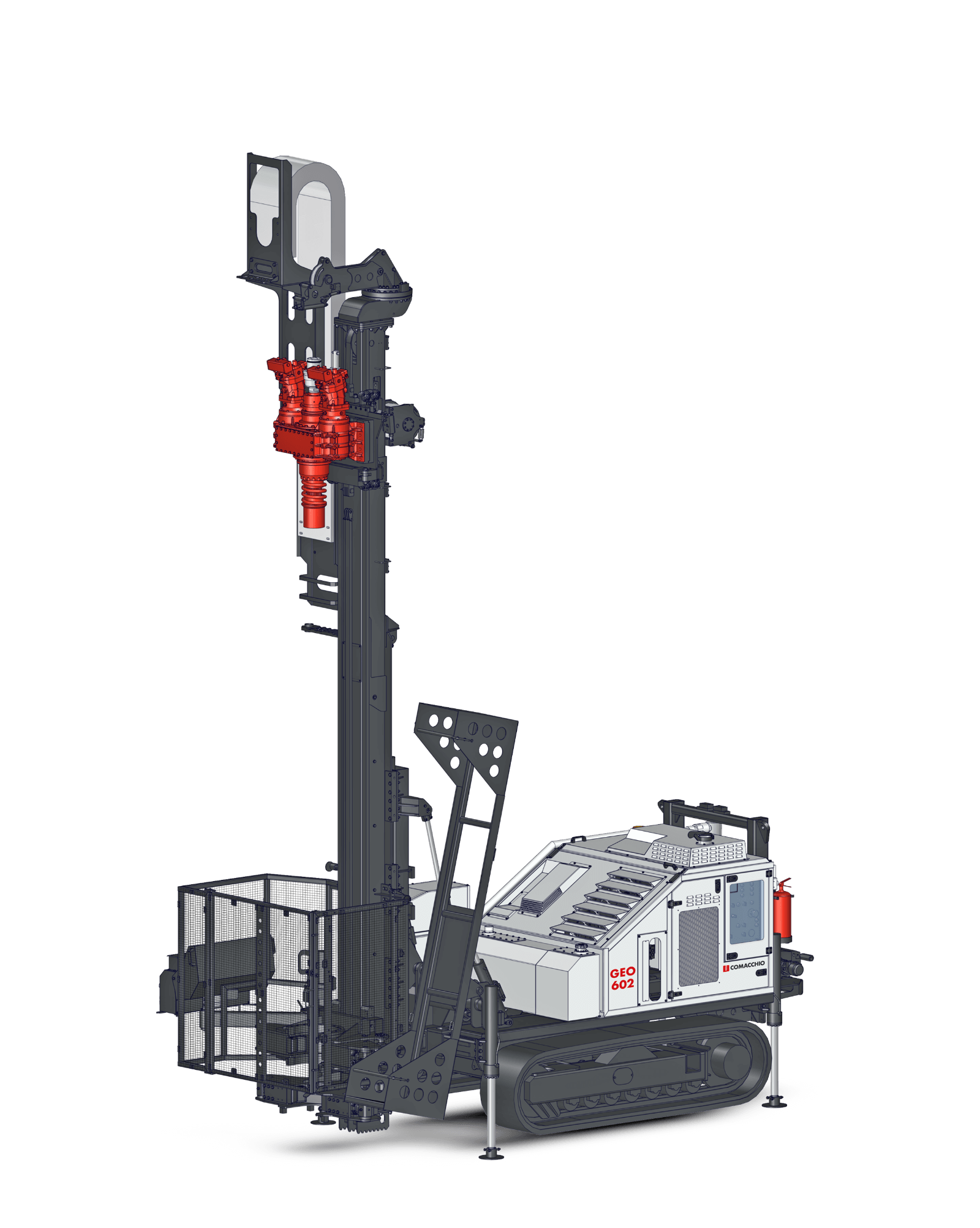
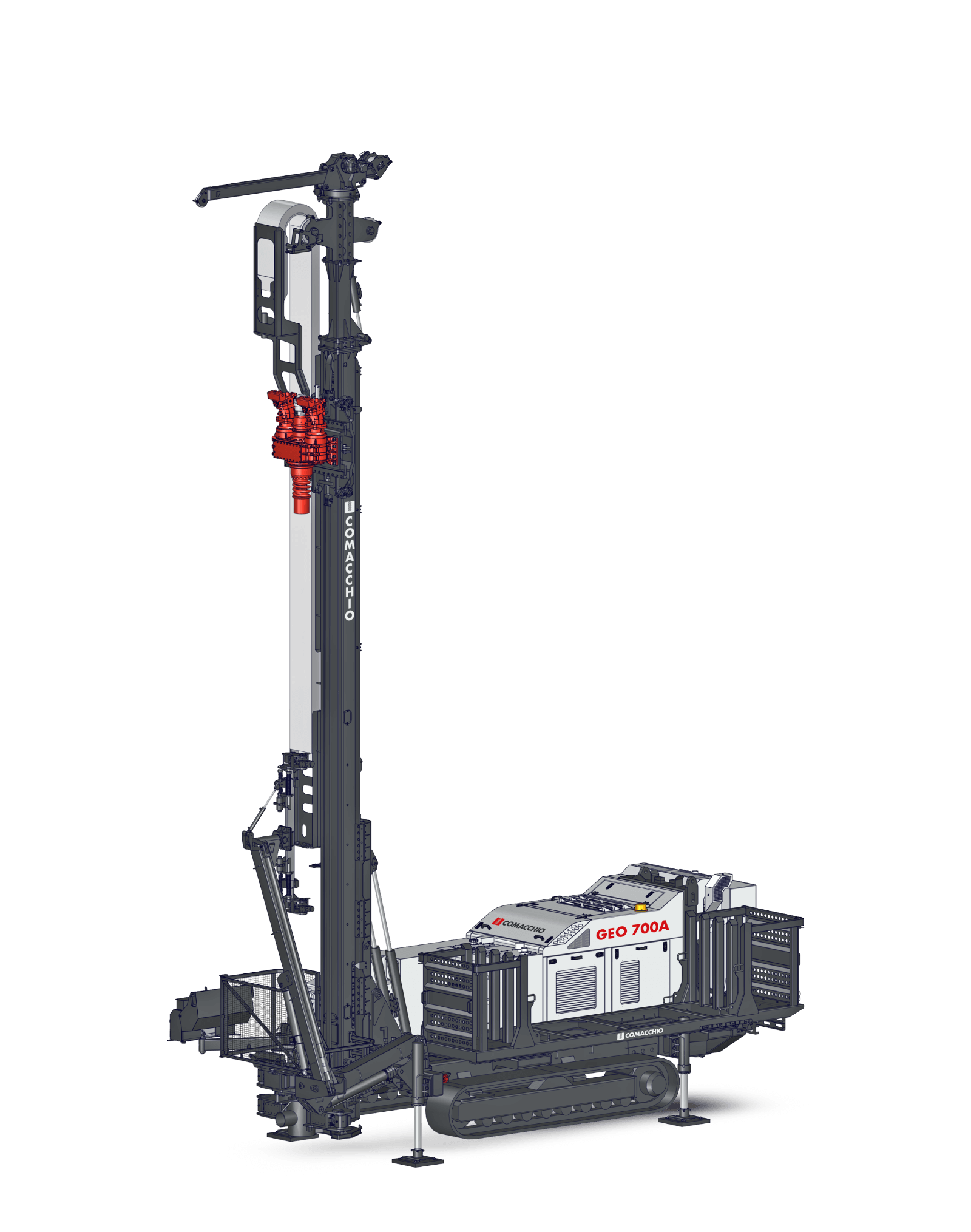
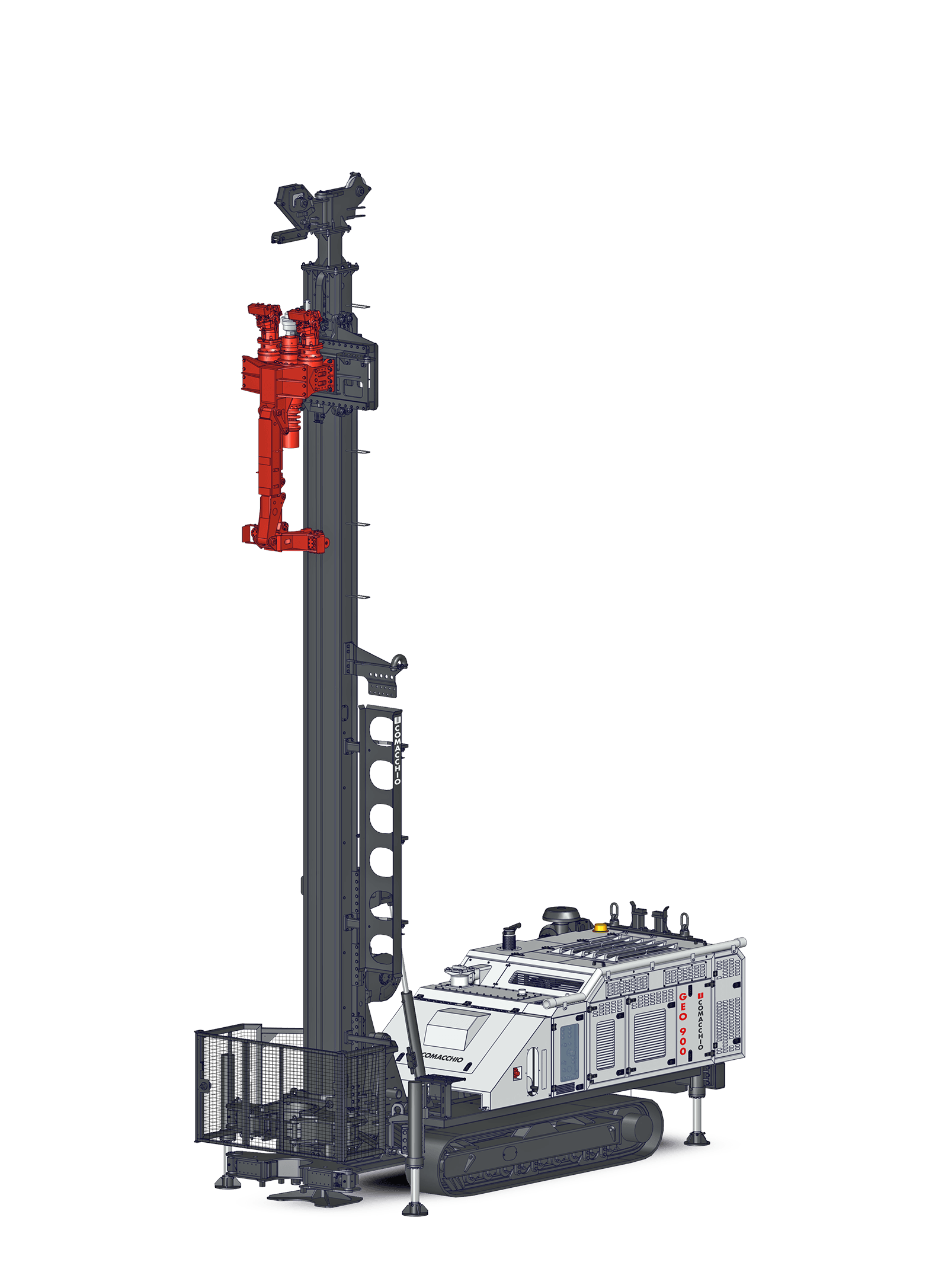
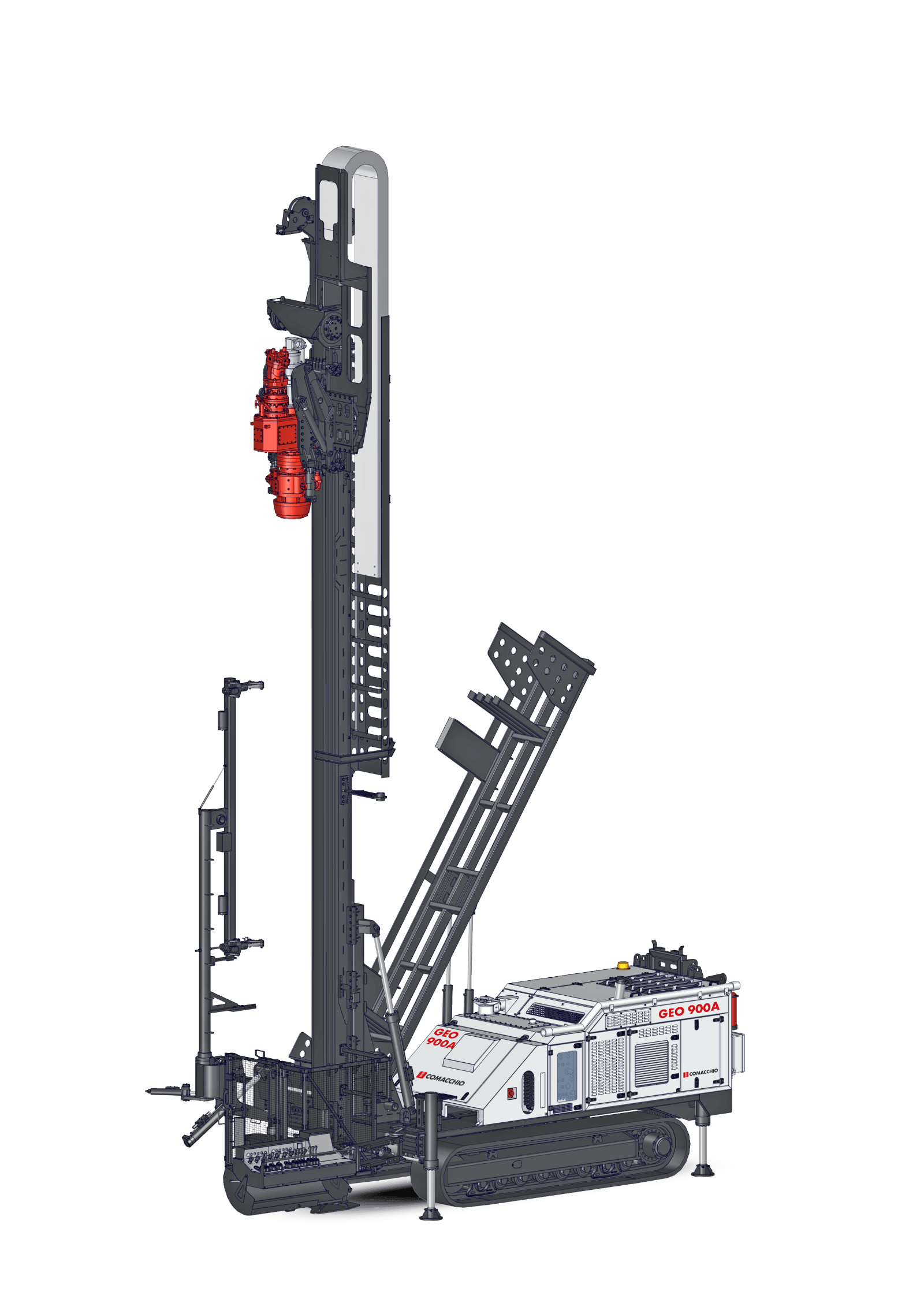
Geothermal drilling methods and the equipment they take
DTH air hammer
The dominant method for vertical closed-loop bores in rock. Fast, straight holes at 4.5"–6" that stay open long enough to insert loop and tremie grout.
4"–6" hammers, hard-rock bit faces, boosters
Mud rotary
Used where overburden is deep or unconsolidated and the bore needs fluid support until loop is set.
Mud pump, tricone bits, temporary casing
Cased advance / overburden drilling
Casing driven with the bit through soil and boulders, then rock-drilled below. Prevents collapse before loop insertion.
Casing systems, eccentric or concentric overburden tooling
Sonic
Used on some loop fields in mixed ground, particularly where nearby structures make vibration and spoil control the deciding factor.
Sonic head, casing and core barrels
Loop handling & grouting
The half of the job that isn't drilling: pipe fusion, loop insertion, tremie grouting with thermally enhanced grout, and pressure testing.
Loop Loader, grout plants, tremie hose, fusion equipment
How to choose the right geothermal rig
- 01
Size to your typical bore, not your deepest
Most closed-loop bores fall in a narrow depth band. A rig sized for that band with margin beats an oversized rig that can't get on a residential lot.
- 02
Access decides the carrier
Backyard and side-yard access drives width, height and track configuration. Measure your tightest recurring gate before you spec.
- 03
Count the cycle, not the ROP
Total time per bore includes tripping, loop insertion, grouting and moving to the next hole. Rod handling and setup speed usually beat raw penetration rate.
- 04
Match the air package to hammer size
Undersized air shows up as slow returns and short bit life on deeper bores. Size cfm and psi against your actual bore depth and annulus.
- 05
Plan grout and loop logistics
A grout plant sized to the rig, and a loop handling method that doesn't tie up two crew members, is what turns a good rig into a productive one.
- 06
Verify parts and service coverage
Loop season is short. Confirm what's stocked domestically, and who responds when a head or a hammer goes down mid-field.
Specifications buyers compare — and why they matter
| Specification | Why it matters |
|---|---|
| Rated depth at 5–6" hole | The bore size most closed-loop fields are drilled at — compare depth ratings there, not at a smaller diameter. |
| Rotary head torque and rpm | Torque for casing advance in overburden; rpm range for rotary work below it. |
| Pulldown and pullback | Pullback determines what you can recover from a tight hole with loop or casing in it. |
| Air package cfm / psi | The main driver of hammer speed and hole cleaning below 300 ft. |
| Machine width, height and weight | Whether the rig gets to a backyard bore field at all, and what it does to the customer's lawn. |
| Rod handling / carousel capacity | Rods per cycle and automated handling directly reduce trip time per bore. |
| Mast configuration and rod length | Longer rods mean fewer connections per 100 ft, at the cost of overhead clearance. |
| Grout pump output and mixing capacity | Grouting has to keep pace with drilling or the second bore of the day starts late. |
| Engine tier and hydraulic flow | Emissions compliance for permitted job sites, and available flow for attachments and handling. |
Who we represent in geothermal drilling
The support behind the rig
Drill pipe & rod
Perforator DTH, rotary and RC drill pipe, subs and crossovers matched to your rotary head thread, torque rating and hole depth.
Drill pipe →Bits, hammers & tooling
DTH hammers and bits, tricone and drag bits, rock drill steel, shanks, and couplings stocked by size and formation.
Tooling →Parts & consumables
Wear parts, filtration, hydraulics, rock drill oil, and thread compound. Stocked items ordered by 3PM CST ship next day.
Consumables →Field service & shop repair
Rig commissioning, preventive maintenance, hydraulic and rotary head rebuilds, and troubleshooting — in the shop or on location by territory.
Field service →Commercial loop field, Upper Midwest
A contractor drilling a multi-bore commercial field was finishing holes faster than the crew could set and grout loop, leaving the rig idle. Reviewing the sequence showed the bottleneck was loop handling and grout throughput, not penetration rate.
Adding Loop Loader-based handling and a grout plant sized to the rig moved the crew to a continuous drill-set-grout cycle, and the rig stopped waiting on the loop crew between bores.
Geothermal equipment questions we get asked
What rig do I need for residential geothermal loops?
A compact tracked rig that fits your tightest recurring access, rated for your typical bore depth at 5–6", with an air package matched to hammer size. Access dimensions usually constrain the choice more than depth does.
How deep are geothermal boreholes?
Vertical closed-loop bores commonly run 200–600 ft depending on load calculations, formation conductivity and available land. Spec the rig for the top of your normal range with margin.
What is the Republic Loop Loader?
It's loop handling equipment Republic designs and builds to speed loop insertion and reduce manual pipe handling per bore. See the Loop Loader product page for configuration details.
Do I need a grout plant?
For closed-loop work, yes — thermally enhanced grout has to be mixed and tremied consistently for the loop to perform as designed. Size the plant so grouting keeps pace with drilling.
Can a water well rig drill geothermal loops?
Often yes, but bore economics differ. Loop fields reward fast setup, tight access and short cycle times over maximum depth capacity, which is why purpose-built geothermal rigs win on multi-bore jobs.
Do you support rigs you didn't sell?
Yes. We supply tooling, pipe, parts and field service for most makes and models, assigned by service territory.
Get a quote on geothermal drilling equipment
Send us the program — formation, depth, hole diameter and access — and we'll quote the rig, tooling and support package that fits it.
Everything else we run.
One Republic, four ways we keep you drilling.
Services
Field service, shop rebuilds, audits, site planning, and driller training — the wraparound that keeps programs running.
Parts
OEM and aftermarket parts pulled from trucks, not catalogs. NEXT-DAY SHIP OF STOCKED ITEMS from four locations.
Tooling
Bits, hammers, fluids, and the kit that gets pulled before the truck leaves the yard.